top of page

Nuno Felting
Nuno felting is a delicate coaxing of thin whisps of wool fibres into a lightweight fabric such as silk. This is done using patience, gentle pressure, and cool soapy water. On a large table I will lay out towels covered with a layer of bubble wrap. A thin nylon netting will be layered on top of the bubble wrap. Layers of silk and thinly placed wool are arranged carefully on the netting and then covered with another layer of netting. Cool soapy water is drizzled over the net and gentle pressure with the fingers is used to blend the wet wool and silk together. This takes a lot of time! Once the silk and wool have fused together, warm soapy water is sprinkled on the felting and the fabric is rolled repeatedly in the bubble matt. This agitation will shrink and felt the fibres. Silk and wool shrink differently when felted so surprising and delightful effects can occur once it is rinsed and dried!
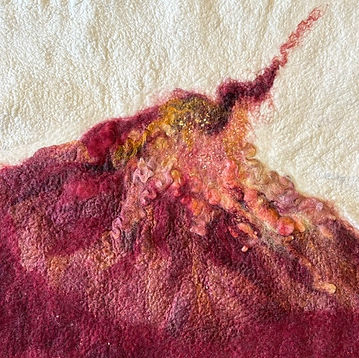
Wet Felting
Wet felting is similar to nuno felting but uses more pressure and heat. When wet felting I place a bamboo mat on top of several towels. A thick base of wool rovings (unspun carded wool fibres) are laid perpendicular on top of each other on the bamboo. Further layers of wool roving are placed over these layers in a design or picture. This is covered in nylon netting which allows water to pass through while holding the fibres in place. Increasing amounts of hot soapy water, pressure, and agitation using the hands, heavy objects, and rolling pins will eventually mat all the wool fibres together. Once this is rinsed and dried I like to add needle felting, sewing machine stitching, and hand embroidery for further detail.

Needle Felting
Needle felting uses sharp needles with barbs on them to stab at dry wool and tangle up and interlock the fibres. Repeated stabbing eventually results in a dense mat of felt. I particularly like needle felting when I’m away from home as it doesn’t require anything other than needles, felt, and wool.

Shibori
Shibori is a Japanese method of tie-dying and can be used in felting with great effect. Near the end of the felting process the wet felted wool fabric can be wrapped around resists such as buttons or marbles and bound with thread. Once the fabric has dried the resists are removed and shapes are left behind that add interest and texture. I love to plan out the design so that contrasting colors in the shibori pop out from the finished felting.

bottom of page